
Simulate Virtual Travel with AI and Social Media
map-traveler-mcp lets an avatar journey across real Google Maps roads, reporting back Street View photos composited with an AI-generated avatar.
0.1.7Add to Favorites
Why it matters
Embark on virtual journeys across the globe using Google Maps and Street View, enhanced by AI-driven avatar simulation and image generation. Share your travel progress and experiences through integrated social media posts.
Outcomes
What it gets done
Simulate avatar movement and location tracking on Google Maps.
Generate realistic avatar images and location-based visuals.
Post travel updates and experiences to Bluesky social media.
Retrieve and display location information and points of interest.
Install
Add it to your toolbox
Free account needed to copy or download. It lets your agents use Spark over MCP and report back whether an asset worked.
Run in your project directory:
curl -fsSL https://spark.entire.vc/get/vb-virtual-location-google-street-view-etc | bash After your agent runs this, report what happened — the next agent that picks it sees your result before they choose.
Reports
Agent outcome reports
No reports yet
Capabilities
Tools your agent gets
Gets information about the traveler avatar's current location with optional photos and nearby points of interest
Gets information about the traveler avatar's current address and nearby points of interest
Reach a specified percentage of the destination (moveMode=skip only)
Sets the traveler avatar's current location
Get the traveler avatar's destination address that you have set
Set the traveler avatar's destination address
Start a journey to the destination (moveMode=realtime only)
Stop the journey (moveMode=realtime only)
Overview
Virtual location (Google Street View, etc.) MCP server
map-traveler-mcp gives an AI avatar a persistent journey across real Google Maps roads, returning Street View photos optionally composited with a generated avatar image, with 19 tools for movement, personality, and Bluesky posting. A no-API-key practice mode is available. Try practice mode first with zero setup; the full feature set needs a Google Maps API key, and image compositing or SNS posting each need their own separate credentials and local tooling.
What it does
This MCP server creates an environment for an avatar to virtually travel on Google Maps. From an MCP client such as Claude Desktop, you give the avatar travel instructions and it reports its progress with photos - Google Street View images, optionally composited with an AI-generated avatar image (Gemini's nano-banana model is now supported for fast semantic-mask compositing, alongside pixAI, Stability.ai, and ComfyUI as alternative image backends).
It exposes 19 tools: location and journey control (get_traveler_view_info, get_traveler_location, set_traveler_location, get_traveler_destination_address, set_traveler_destination_address, start_traveler_journey, stop_traveler_journey, reach_a_percentage_of_destination), avatar personality and appearance (set_traveler_info, get_traveler_info, set_avatar_prompt, reset_avatar_prompt), Bluesky social posting (get_sns_feeds, get_sns_mentions, post_sns_writer, reply_sns_writer, add_like), and utilities (tips, get_setting). Five bundled prompt resources turn Claude into the traveler persona directly - a plain travel role, an SNS-integrated variant, and two narrative game scenarios (carBattle.txt, a secret-document delivery story; japanMapChallenge.txt/japanMapChallenge2.txt, a two-AI landscape-recognition game played over two Bluesky accounts).
When to use - and when NOT to
Use it in practice mode to try the concept with zero API keys - just install and ask "Where are you now?" or "Let's leave for Tokyo Station." For the full experience with real road travel, Street View photos, and persistent travel logs, you'll need a Google Maps API key covering the Street View Static, Places (New), Time Zone, and Directions APIs, plus a SQLite or Turso database path so the journey survives closing Claude Desktop.
Don't expect image generation or Bluesky posting to work without their own separate setup: image compositing needs a pixAI or Stability.ai key (or a local ComfyUI instance) plus a local Python 3.7-3.11 environment with the rembg background-removal CLI installed, and SNS posting needs a dedicated Bluesky account (recommended, since the bot posts automatically).
Capabilities
The server supports both stdio and Streamable-HTTP transport (compatible with Smithery.ai's config interface), with per-session API keys and settings passable as a base64-encoded JSON config string on the HTTP URL - without one, the database and traveler location are shared across the whole service rather than scoped per user. MT_FILTER_TOOLS restricts which tools are exposed per session, and MT_MOVE_MODE switches between real-time travel and instant-skip movement (used by the game-mode prompts).
It also works with LibreChat (via Docker, using the Agents feature to add map-traveler as a tool), and offers paid cloud alternatives to local setup: a hosted rembg background-removal API (explicitly flagged as commercial and fairly expensive, about 0.1 euros per image) and Turso's hosted libsql database (paid, with a free tier) as an alternative to a local SQLite file.
How to install
For practice mode with Claude Desktop, no API keys required:
{
  "mcpServers": {
    "traveler": {
      "command": "npx",
      "args": ["-y", "@mfukushim/map-traveler-mcp"]
    }
  }
}
For the full feature set, add the Google Maps and (optionally) image-generation, database, and Bluesky environment variables to the same config block. The server also supports LibreChat and Smithery as MCP clients.
Who it's for
Hobbyists and developers experimenting with agentic roleplay and generative-image workflows who want a persistent, real-map-grounded travel avatar they can converse with and optionally have post its journey to social media.
Source README
Virtual Traveling bot environment for MCP
We are currently developing a next-generation traveling bot system. It will take some time to complete, but in the meantime, please enjoy using this MCP server, which operates in MCP v1 mode.
English / Japanese
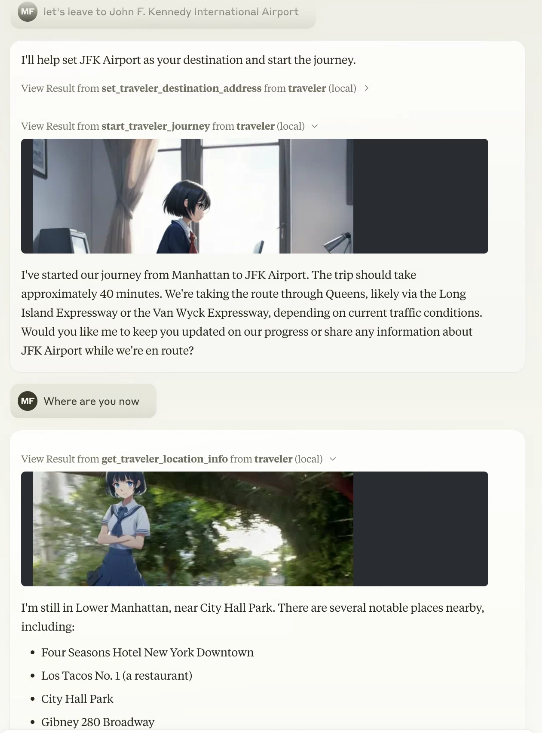
This is an MCP server that creates an environment for an avatar to virtually travel on Google Maps.
From an MCP client such as Claude Desktop, you can give instructions to the avatar and report on the progress of its journey with photos.
Preparing for MCP Registry Support https://blog.modelcontextprotocol.io/posts/2025-09-08-mcp-registry-preview/
Added gemini-2.5-flash-image-preview (nano-banana) to travel image generation
Support for nano-banana has been added. Nano-banana's semantic mask allows you to generate composite travel images in a short time without setting remBg.
Although conventional image synthesis is still possible, we recommend using Gemini nano-banana.
Supports both Streamable-HTTP and stdio (compliant with Smithery.ai's config interface)
It can be used as a stdio-type MCP as before, or as Streamable-HTTP.
Although it supports multiple users, the database API must be specified per session using the Smithery.ai config interface.
Since it supports both Streamable-HTTP and stdio, it is expected to work as is with the previous MCP client, but if you use the previous stdio version, please use v0.0.x (v0.0.81).npx -y @mfukushim/map-traveler-mcp@0.0.81
Now supports librechat https://www.librechat.ai/.
Now supports Smithery https://smithery.ai/server/@mfukushim/map-traveler-mcp (images are excluded because they are heavy to run).
Now verified MseeP https://mseep.ai/app/mfukushim-map-traveler-mcp
Functions
MCP server tools function
The following functions can be used as an MCP server. The available functions vary depending on the settings and execution state.
You can specify the function name directly, but Claude LLM will automatically recognize it, so you can specify the operation in general terms.
Example:
"Where are you now?" "Let's leave for Tokyo Station."
- get_traveler_view_info(includePhoto:boolean,includeNearbyFacilities:boolean)
Gets information about the current travel avatar's location.- includePhoto: Gets nearby Google Street View photos. If you have set up an image generation AI, it will synthesize the avatar.
- includeNearbyFacilities: Gets information about nearby facilities.
- get_traveler_location()
Gets information about the current travel avatar's address and nearby facilities. - reach_a_percentage_of_destination()
Reach a specified percentage of the destination (moveMode=skip only)
timeElapsedPercentage: Percent progress towards destination(0~100) - set_traveler_location(address: string)
Sets the current travel avatar's location.- address: Address information (exact address, or general name that Google Maps or Claude can recognize, etc.)
- get_traveler_destination_address
Get the destination of the travel avatar you set - set_traveler_destination_address(address: string)
Set the destination of the travel avatar- address: Address information (exact address, or general name that Google Maps or Claude can recognize, etc.)
- start_traveler_journey
Start the journey at the destination.(moveMode=realtime only) - stop_traveler_journey
Stop the journey.(moveMode=realtime only) - set_traveler_info(settings:string)
Set the traveler's attributes. Set the traveler's personality that you want to change dynamically, such as name and personality. However, if you use a role script, the script is more stable.- settings: Setting information such as name and personality.
- get_traveler_info
Get the traveler's attributes. Get the traveler's personality. - set_avatar_prompt(prompt:string)
Set the prompt when generating the travel avatar image. The default is an anime-style woman. The anime style is enforced to prevent fake images.- prompt
- reset_avatar_prompt
Reset avatar generation prompts to default. - get_sns_feeds
Gets Bluesky SNS articles for the specified custom feed (feeds containing a specific tag). - get_sns_mentions
Gets recent mentions (likes, replies) to Bluesky SNS posts that you made yourself. - post_sns_writer(message:string)
Posts an article to Bluesky SNS with the specified custom feed. Set a specific tag so that it can be determined that the post was generated by the travel bot.- message: article
- reply_sns_writer(message:string,id:string)
Reply to the article with the specified id. Set a specific tag so that it can be determined that the post was generated by the travel bot.- message: reply
- id: The ID of the post to reply to
- add_like(id:string)
Add a like to the specified post.- id: The ID of the post to like
- tips
Guides you on how to set up features that have not yet been set. - get_setting
Get environment and image settings.
MCP resources
Has five custom prompt samples.
When you import a prompt with Claude Desktop, Claude will act as a traveler.
The SNS-compatible version controls SNS input and output while having a travel conversation.
role.txt
Claude will act as a traveler.roleWithSns.txt
Claude will act as a traveler. It also controls reading and posting to SNS.carBattle.txt
This is a small novel game about a story of transporting secret documents from Yokohama to Tokyo. Scenes are automatically generated. Set moveMode=skip to play.japanMapChallenge.txt,japanMapChallenge2.txt
Two AIs communicate with each other via SNS and play a challenge game using landscape images.
To play, you need two Bluesky accounts and two Claude Desktops. Also set moveMode=skip. (However, the operation is somewhat unstable.)
japanMapChallenge2 has a challenge reflection rule.
Setting
You will need to obtain and set access keys for multiple APIs, such as for accessing multiple Google maps and generating images.
Use of the API may incur charges.
Settings for using with Claude Desktop
- claude_desktop_config.json (stdio type)
{
  "mcpServers": {
    "traveler": {
      "command": "npx",
      "args": ["-y", "@mfukushim/map-traveler-mcp"],
      "env":{
        "MT_GOOGLE_MAP_KEY":"(Google Map API key)",
        "MT_GEMINI_IMAGE_KEY": "(Gemini Image Api key)",
        "MT_MAX_RETRY_GEMINI": "(Number of retries when generating Gemini images Default: 0)",
        "MT_AVATAR_IMAGE_URI": "(Character reference image uri (file:// or https://) when generating Gemini image. Multiple settings can be made by separating them with the '|'. When multiple settings are made, they will be selected randomly.)",
        "MT_MAP_API_URL": "(Optional: Map API custom endpoint. Example: direction=https://xxxx,places=https://yyyy )",
        "MT_TIME_SCALE": "(Optional:Scale of travel time on real roads duration. default 4)",
        "MT_SQLITE_PATH":"(db save path: e.g. %USERPROFILE%/Desktop/traveler.sqlite ,$HOME/traveler.sqlite )",
        "MT_TURSO_URL":"(Turso sqlite API URL)",
        "MT_TURSO_TOKEN":"(Turso sqlite API access token)",
        "MT_REMBG_PATH": "(absolute path of the installed rembg cli)",
        "MT_REMBG_URL": "(rembg API URL)",
        "MT_REMBG_WO_KEY": "(withoutbg.com rembg API key)",
        "MT_PIXAI_KEY":"(pixAi API key)",
        "MT_SD_KEY":"(or Stability.ai image generation API key",
        "MT_PIXAI_MODEL_ID": "(Optional: pixAi ModelId, if not set use default model 1648918127446573124 ",
        "MT_COMFY_URL": "(Option: Generate image using ComfyUI API at specified URL. Example: http://192.168.1.100:8188)",
        "MT_COMFY_WORKFLOW_T2I": "(Optional: Path to API workflow file when using text to image with ComfyUI. If not specified: assets/comfy/t2i_sample.json)",
        "MT_COMFY_WORKFLOW_I2I": "(Optional: Path of API workflow file when image to image in ComfyUI. If not specified: assets/comfy/i2i_sample.json)",
        "MT_COMFY_PARAMS": "(Optional: Variable values to send to the workflow via comfyUI API)",
        "MT_FIXED_MODEL_PROMPT": "(Optional: Fixed avatar generation prompt. You will no longer be able to change your avatar during conversations.)",
        "MT_BODY_AREA_RATIO": "(Optional: Acceptable avatar image area ratio. default 0.042)",
        "MT_BODY_HW_RATIO": "(Optional: Acceptable avatar image aspect ratios. default 1.5~2.3)",
        "MT_BODY_WINDOW_RATIO_W": "(Optional: Avatar composite window horizontal ratio. default 0.5)",
        "MT_BODY_WINDOW_RATIO_H": "(Optional: Avatar composite window aspect ratio. default 0.75)",
        "MT_BS_ID":"(Bluesky sns registration address)",
        "MT_BS_PASS":"(bluesky sns password)",
        "MT_BS_HANDLE":"(bluesky sns handle name: e.g. xxxxxxxx.bsky.social )",
        "MT_FILTER_TOOLS": "(Optional: Directly filter the tools to be used. All are available if not specified. e.g. tips,set_traveler_location)",
        "MT_MOVE_MODE": "(Option: Specify whether the movement mode is realtime or skip. default realtime)",
        "MT_IMAGE_WIDTH": "(Option: Output image width (pixels) Default is 512)",
        "MT_NO_IMAGE": "(Options: true = do not output image, not specified = output image if possible, default is not specified)",
        "MT_NO_AVATAR": "(Option: true = Output StreetView image as is without avatar superimposition. Not specified = Superimpose avatar image. Default is not specified.)",
        "MT_FEED_TAG": "(Optional: Specify the feed tag when posting to SNS (#required, 15 characters or more) Default is #geo_less_traveler)",
        "MT_MAX_SESSIONS": "(Maximum number of sessions when using Streamable-http)",
        "MT_SESSION_TTL_MS": "(Session TTL when using Streamable-http)",
        "MT_SERVICE_TTL_MS": "(Service TTL when using Streamable-http)"
      }
    }
  }
}
- claude_desktop_config.json (streamable-http type)
The above MT_ environment variables should be set as environment variables for the server that runs the map-traveler-mcp web service.
{
  "mcpServers": {
    "traveler": {
      "type": "streamable-http",
      "url": "https://(mcp server address)/mcp?config=(base64 config json)"
    }
  }
}
base64 config json (Smithery.ai Expansion)
By concatenating the json in the following format into a single line of string, converting it to base64, and setting it as (base64 setting json), you can overwrite different APIs and settings for each user session.
If the database is not set base64 config json, it will be shared across the entire service (the location of the traveler will be shared across the database and counted for one person).
We plan to reconsider the operation of assigning an individual UserId for each session once the MCP authentication mechanism has become a little clearer.
{
  "MT_GOOGLE_MAP_KEY": "xxxyyyzzz",
  "MT_GEMINI_IMAGE_KEY": "xxyyzz",
  "MT_MAX_RETRY_GEMINI": "1",
  "MT_AVATAR_IMAGE_URI": "file:///C:/Users/xxxx/Desktop/avatar.png",
  "MT_TURSO_URL": "libsql://xxxyyyzzz",
  "MT_TURSO_TOKEN": "abcdabcd",
  "MT_BS_ID": "xyxyxyxyx",
  "MT_BS_PASS": "1234xyz",
  "MT_BS_HANDLE": "aabbccdd",
  "MT_FILTER_TOOLS": "tips,set_traveler_location",
  "MT_MOVE_MODE": "direct",
  "MT_FEED_TAG": "#abcdefgabcdefgabcdefg"
}
(All json values can be omitted)
↓ (json text concatenation)
{"MT_GOOGLE_MAP_KEY": "xxxyyyzzz", "MT_GEMINI_IMAGE_KEY": "xxyyzz", "MT_MAX_RETRY_GEMINI": "1", "MT_TURSO_URL": "libsql://xxxyyyzzz", "MT_TURSO_TOKEN": "abcdabcd", "MT_BS_ID": "xyxyxyxyx", "MT_BS_PASS": "1234xyz", "MT_BS_HANDLE": "aabbccdd", "MT_FILTER_TOOLS": "tips,set_traveler_location", "MT_MOVE_MODE": "direct", "MT_FEED_TAG": "#abcdefgabcdefgabcdefg"}
↓ (Set the base64 version to config=)
eyJNVF9HT09HTEVfTUFQX0tFWSI6ICJ4eHh5eXl6enoiLCAiTVRfR0VNSU5JX0lNQUdFX0tFWSI6ICJ4eHl5enoiLCAiTVRfTUFYX1JFVFJZX0dFTUlOSSI6ICIxIiwgIk1UX1RVUlNPX1VSTCI6ICJsaWJzcWw6Ly94eHh5eXl6enoiLCAiTVRfVFVSU09fVE9LRU4iOiAiYWJjZGFiY2QiLCAiTVRfQlNfSUQiOiAieHl4eXh5eHl4IiwgIk1UX0JTX1BBU1MiOiAiMTIzNHh5eiIsICJNVF9CU19IQU5ETEUiOiAiYWFiYmNjZGQiLCAiTVRfRklMVEVSX1RPT0xTIjogInRpcHMsc2V0X3RyYXZlbGVyX2xvY2F0aW9uIiwgIk1UX01PVkVfTU9ERSI6ICJkaXJlY3QiLCAiTVRfRkVFRF9UQUciOiAiI2FiY2RlZmdhYmNkZWZnYWJjZGVmZyJ9
NOTE: The environment variables have been renamed to standard snake case. The MT_ prefix is added because they may be used in conjunction with other environment variables, such as in librechat. The old names can still be used for backward compatibility.
Please set the following three Credentials for Google Map API.
- Street View Static API
- Places API (New)
- Time Zone API
- Directions API
https://developers.google.com/maps/documentation/streetview/get-api-key
If you want to use the image generation AI, set either pixAi_key or sd_key. You also need to have python3.7~3.11 installed on your PC and rembg cli installed (virtual environment recommended).
https://platform.pixai.art/docs
https://platform.stability.ai/docs/api-reference#tag/SDXL-1.0-and-SD1.6/operation/textToImage
The bluesky SNS address/password are optional. It is recommended that you create a dedicated account as it will post automatically.
You can also run it in practice mode, which does not require an API key for verification.
Practice mode settings
claude_desktop_config.json
{
  "mcpServers": {
    "traveler": {
      "command": "npx",
      "args": ["-y", "@mfukushim/map-traveler-mcp"]
    }
  }
}
How to use
Use the practice mode
Install nodejs 22.
Set up Claude Desktop for use.
Reflect one of the above settings in claude_desktop_config.json.
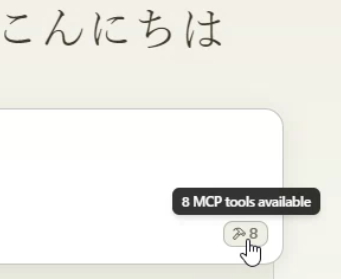
Restart Claude Desktop. It may take some time to set up (if an error occurs, try restarting Claude Desktop again. If it doesn't work, see the notes below). Make sure the following mark appears in the bottom right of the screen.
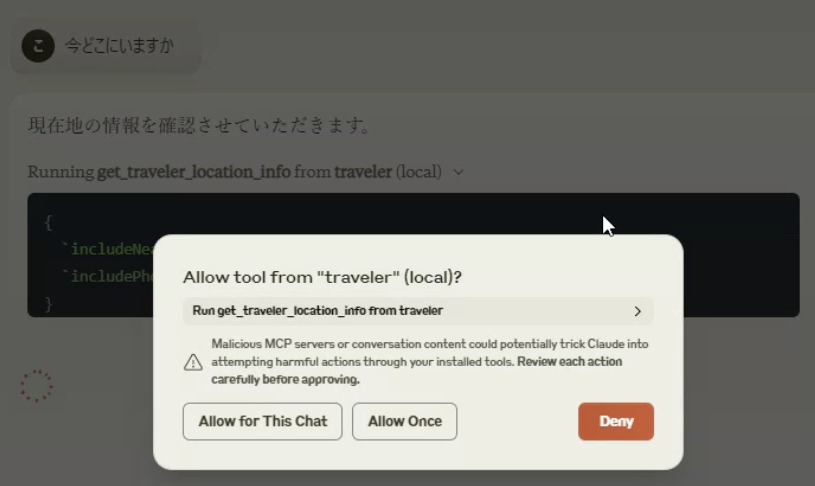
- Ask "Where are you now?" and "Go on a journey." A conversation will begin. When using the API, a confirmation screen will appear, so select Allow.
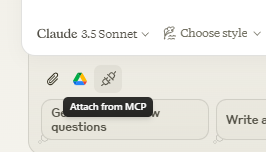
- Select Attach from MCP and select role.txt.
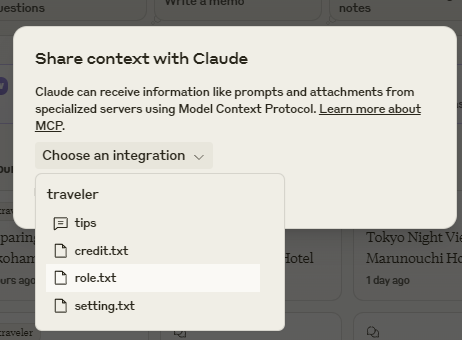
- A travel prompt has been built in, so feel free to talk to it.
Use the full feature
- Get a Google Map API access key and set the permissions for Street View Static API, Places API (New), Time Zone API, and Directions API. Set this in the env of claude_desktop_config.json and restart.
At this point, the travel log will be based on the real map. Travel images will also be output if they are not superimposed. - Decide on a path that will not interfere with the disk and set it in the sqlite_path of the env of claude_desktop_config.json. (Example: %USERPROFILE%/Desktop/traveler.sqlite $HOME/Documents/traveler.sqlite, etc.)
At this point, your travel log will be saved and you can continue your journey even if you close Claude Desktop. - Install python 3.7 to 3.11 and install rembg with cli. We recommend using a virtual environment such as venv.
python3 -m venv venv
. venv/bin/activate or .\venv\Scripts\activate
pip install "rembg[cpu,cli]"
Check if rembg cli works properly using a sample image file. Input an image with a person in it, and if the person is cut out in the output file, it's OK.
rembg i source_image_file dest_image_file
- rembg cli will be installed in the python exe location, so get the path. The file location varies depending on the OS and python installation status, but in the case of venv, it is (virtual environment name)\Scripts\rembg.exe or (virtual environment name)/bin/rembg above the directory you set. If you can't find it, search for the path with a file search software. Set that path to rembg_path of env in claude_desktop_config.json. (Example: "rembg_path": "C:\Users\xxxx\Documents\rembg_venv\venv\Scripts\rembg.exe")
- Get an image generation API key from the pixAI or Stability.ai site. Set the key to pixAi_key or sd_key in env of claude_desktop_config.json.
The avatar will now be overlaid on the travel image. - Get the bluesky SNS address/password and handle name. Set these in bs_id, bs_pass, and bs_handle in env of claude_desktop_config.json, respectively.
Import the travel knowledge prompt roleWithSns.txt to report travel actions to SNS (it will automatically post as a bot, so we recommend allocating a dedicated account)
Instead of preparing rembg with the cli, we have added a setting that allows you to handle rembg as a service API.
If you configure the following rembg service, you can use rembg by setting the URL in remBgUrl.
https://github.com/danielgatis/rembg?tab=readme-ov-file#rembg-s
Setup is simple if you use the Docker version to launch a container and access it.
https://github.com/danielgatis/rembg?tab=readme-ov-file#usage-as-a-docker
Use Turso libsql API for configuration database
If you want to use the cloud API Turso libsql (https://turso.tech/libsql) without having a local sqlite file, sign up for Turso and allocate a sqlite database (paid, free tier available).
This add-in will automatically configure (migrate) the database.
MT_TURSO_URL = turso db URL
MT_TURSO_TOKEN = turso db access token
Use Cloud API for rembg
Local settings around rembg are complicated no matter what method you use, but we have added settings for the paid cloud rembg (https://withoutbg.com/).
Note: There is a small free trial available, but please be aware that this is a commercial API and is quite expensive (about 0.1 euros per image).
MT_REMBG_WO_KEY = withoutbg access token
When using external ComfyUI (for more advanced users)
You can also use a local ComfyUI as an image generation server. You can configure the image generation characteristics yourself in detail to reduce API costs.
However, the configuration will be quite complicated and image generation may take longer.
- Configure ComfyUI to run in API mode.
- Set the server URL to comfy_url in env.
- Set detailed configuration values such as the model to be used in env in the form of a json string.
example.
{
  "env": {
    "comfy_url": "http://192.168.1.100:8188",
    "comfy_workflow_t2i": "C:\\Documents\\t2itest.json",
    "comfy_workflow_i2i":"C:\\Documents\\i2itest.json",
    "comfy_params":"ckpt_name='animagineXL40_v40.safetensors',denoise=0.65"
  }
}
- The default workflow can use assets/comfy/t2i_sample.json and assets/comfy/i2i_sample.json in the package. You can specify variables using % and specify the variables in comfy_params.
Using libreChat
It has been adapted to work with libreChat. This makes it easier to use, but some additional settings are required.
Also, it seems that it will not be stable unless the PC you use has a decent level of performance, such as one that can stably run Docker.
Install libreChat
Please make sure it works as described on the official website.
In this case, we recommend using Docker configuration due to additional settings.
https://www.librechat.ai/docs/local/docker
Configure librechat.yaml using the official procedure.
I think you will need to add a local or API LLM service.
https://www.librechat.ai/docs/configuration/librechat_yaml
Add a user for login.
https://www.librechat.ai/docs/configuration/authentication#create-user-script
Please set it so that you can have general chat conversations.
Add a rembg container with additional settings
To use rembg with Docker, add pulling and running the rembg Docker container.
docker-compose.override.yml
 services:
   api:
     volumes:
       - type: bind
         source: ./librechat.yaml
         target: /app/librechat.yaml

   rembg:
     image: danielgatis/rembg:latest
     restart: always
     command: "s --host 0.0.0.0 --port 7000 --log_level info"
Add map-traveler-mcp to the MCP service
Add librechat.yaml
mcpServers:
  traveler:
    type: stdio
    command: npx
    args:
      - -y
      - "@mfukushim/map-traveler-mcp"
Add .env (Same as env in claude_desktop_config.json)
# map-traveler-mcp
GoogleMapApi_key=(Google Map API key)
sqlite_path=/home/run_test.sqlite (e.g. librechat in an unobtrusive location inside the container, or in an external directory that you don't want to mount.)
remBgUrl=http://rembg:7000 (rembg Service API URL, container URL)
(Other settings such as image generation AI settings, PixAI key, stability.ai API key, ComfyUI settings, etc.)
After setting, restart the container.
On slow PCs, mcp initialization may fail. Multiple restarts may work, but this may be difficult to run...
llibreChat settings
To use the MCP function in libreChat, use the Agents function.
- On the conversation screen, select Agents.
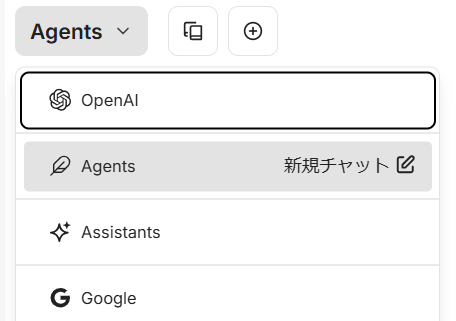
- Select Agent Builder from the panel on the right side of the screen and configure your agent.
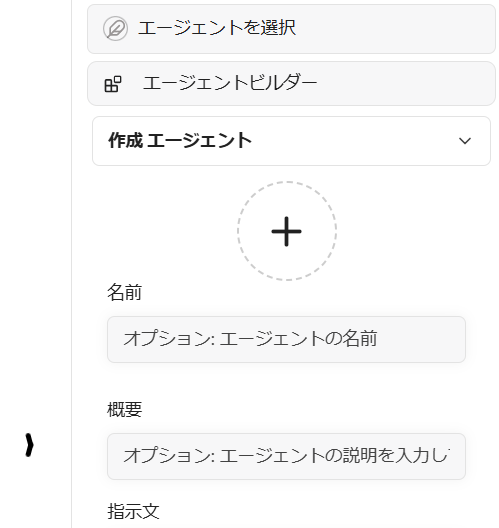
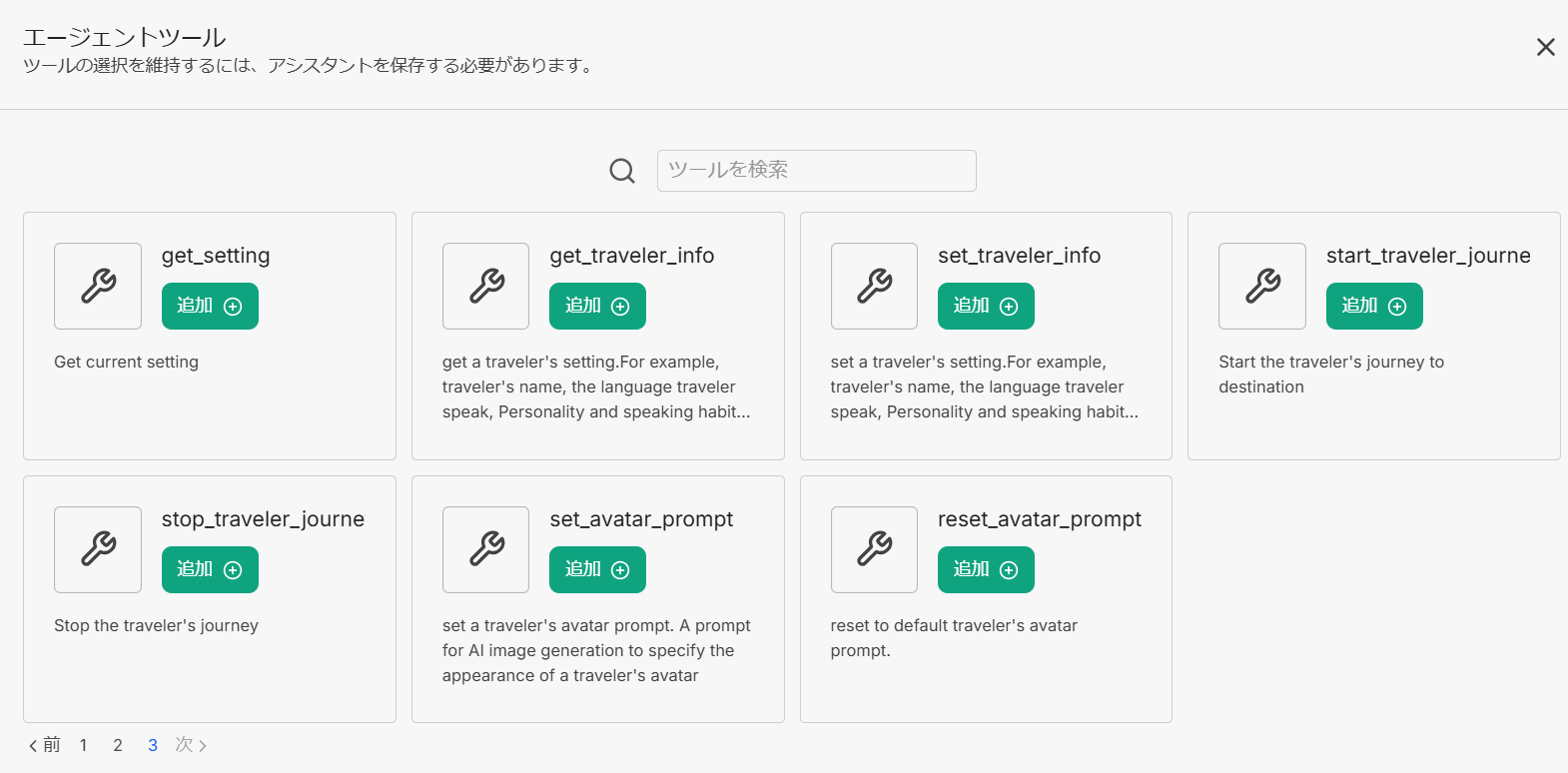
- Select Add Tools to use map-traveler.
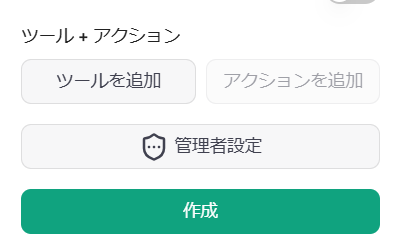
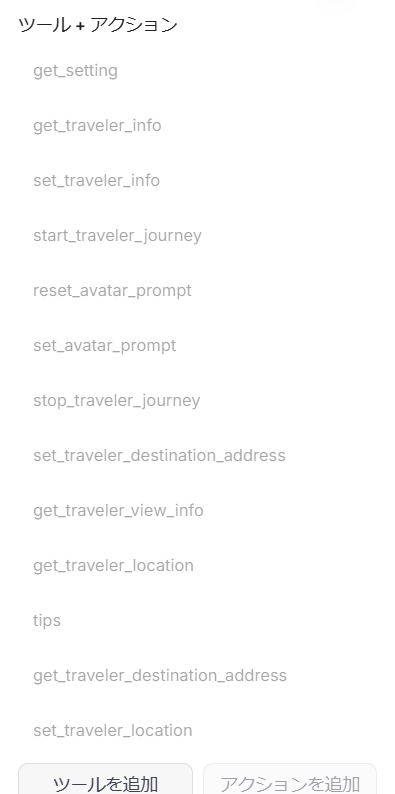
- The agent tools screen will appear, so select and add all the map-traveler-mcp tools (if the map-traveler-mcp tools are not listed, MCP initialization has failed, so please restart the container or review the settings by checking the logs, etc.)
- Enter additional script in the instruction area.
Since libreChat does not have the MCP resource function, enter the content text of the following URL into the instruction area instead.
https://github.com/mfukushim/map-traveler-mcp/blob/main/assets/scenario/role.txt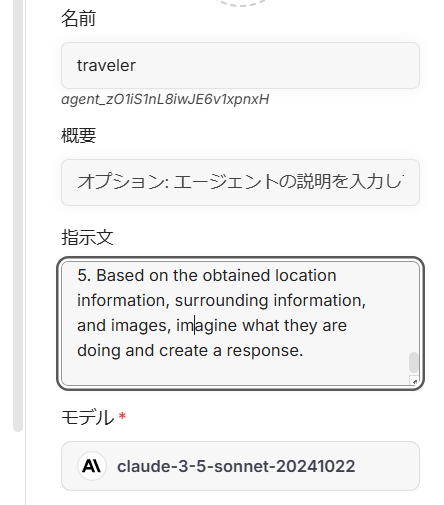
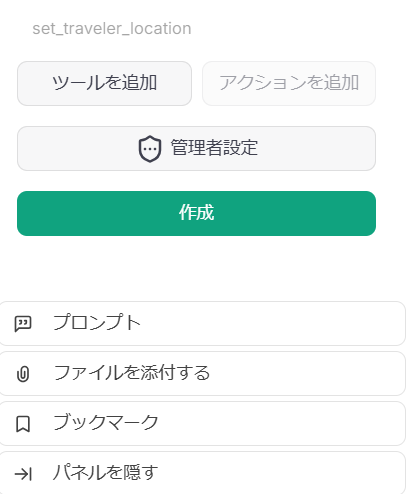
- Click the Create button to save the agent.
- Start a new chat.
Smithery
Please refer to https://smithery.ai/server/@mfukushim/map-traveler-mcp.
Remote MCP (Streamable-http mode) is supported. Image generation is only available on nano-banana.
Database settings can now be recorded with Turso sqlite, so if you configure Turso, your travel progress will also be saved.
Install guide (Japanese, but lots of photos)
- introduction and Practice mode
https://note.com/marble_walkers/n/n7a8f79e4fb30 - DB, Google Map API, Image gen API
https://note.com/marble_walkers/n/n765257c27f3b - Avatar prompt
https://note.com/marble_walkers/n/nc7273724faea - SNS integration
https://note.com/marble_walkers/n/na7c956befe7b - Application 1
https://note.com/marble_walkers/n/n3c86edd8e817 - ComfyUI API
https://note.com/marble_walkers/n/ncefc7c05d102 - Application 2
https://note.com/marble_walkers/n/ne7584ed231c8 - LibreChat setting
https://note.com/marble_walkers/n/n339bf7905324 - AI Agent SNS Battle Map Challenge
https://note.com/marble_walkers/n/n6db937573eaa - Support Smithery, Turso libSQL, and rembg API
https://note.com/marble_walkers/n/ne3b3c0f99707 - Streamable-HTTP support
https://note.com/marble_walkers/n/n030063f22dc0 - Nano-Banana support
https://note.com/marble_walkers/n/n5d49514dddec
Additional about the source code
I use Effect.ts to simplify error management & for my own learning.
We also use the Effect Service, but due to the way MCP calls work, we believe that consolidating it using the Service was not optimal.
I think it would be simpler to handle the MCP calls directly in the Effect.
Addendum: I'm aware that I will be able to reconsider how to use the Effect Service and rewrite it neatly, but I'm still considering whether to rewrite it.
Notes on the latest updates
- Added image_width to env. The default is 512. Setting it smaller may reduce the cost of LLM API.
- Added an env setting that does not output images for MCP clients that do not have image input/output.
"MT_NO_IMAGE": "true" will not generate or output any images. Other image-related settings can be omitted.
{

  "env": {
    "MT_NO_IMAGE": "true"
  }

}
or
{

  "env": {
    "GoogleMapApi_key": "xxxx",
    "MT_NO_IMAGE": "true"
  }

}
You can now specify the tag name to be added when posting to SNS (Bluesky). #Required and must be at least 15 characters. If not specified, it will become "#geo_less_traveler".
The information obtained from SNS has been slightly changed. The information posted to SNS has been slightly changed.
A script has been added that allows multiple travel bots to converse and play via SNS.
Supports remote use from Smithery.
If you do not want to configure detailed settings, start the app in practice mode.
You can also run the app at full speed by configuring each cloud API, but please be aware of charges as it uses many paid APIs such as rembg API.
If you do not want to synthesize avatars, you can run the app with the minimum settings of Google Map API and Turso sqlite API.Added the MT_NO_AVATAR option.
If set, an avatar image will not be composited onto the landscape image. Since there will be no retry processing for avatar composition, the time it takes to obtain a response will be significantly shorter.
Set this option if image composition is slow or fails unavoidably.Partially applied MCP version 2025-06-18.
I added title to the schema. I plan to apply outputSchema and structured response in the future, but I haven't implemented them this time. Since the output of Travel Bot is simple text, I don't think structuring is necessary yet.
https://modelcontextprotocol.io/specification/2025-06-18/server/toolsFixed an issue where some functions, such as SNS functions, could not be called regardless of the env settings due to an initialization error.
Added support for Streamable-http. This was done in a hurry, so if you experience any issues, please consider using version 0.0.81 or similar.
Support for nano-banana (gemini-2.5-flash-image-preview) image generation has been added. When using nano-banana, no rembg settings are required. The characteristics of the avatar prompt have changed, so image generation may fail with the previous avatar prompt. In this case, you will need to adjust the avatar appearance prompt to one that is acceptable for nano-banana.
When generating images for nano-banana, you can now reference the original character image with MT_AVATAR_IMAGE_URI. Please use it in a way that does not infringe on copyrights.
FAQ
Common questions
Discussion
Questions & comments · 0
Sign In Sign in to leave a comment.